
Cardamom essential oil is an excellent ally to have in your home for a myriad of reasons. A member of the ginger family, cardamom has been used in medicine, perfumery, and as a flavoring agent in food and drink for thousands of years. Its extremely tenacious aroma is spicy-sweet, warming, fresh, penetrating, and stimulating, with woodsy and balsamic undertones that play on the senses and uplift the heart. If you haven't tried cardamom essential oil, you're missing out - a lot!
The Benefits and Properties of Cardamom Essential Oil
Botanical Name
Elettaria cardamomum
Synonyms
Cardamom seed and cardamom
Family
Zingiberaceae (ginger family)
Origins
Cardamom is native to tropical Southeast Asia and is now cultivated in Sri Lanka, El Salvador, Guatemala, and India. It is a perennial herb with long stems that are adorned with lance-shaped leaves. The flowers are white in color with beautiful yellow or red stripes.
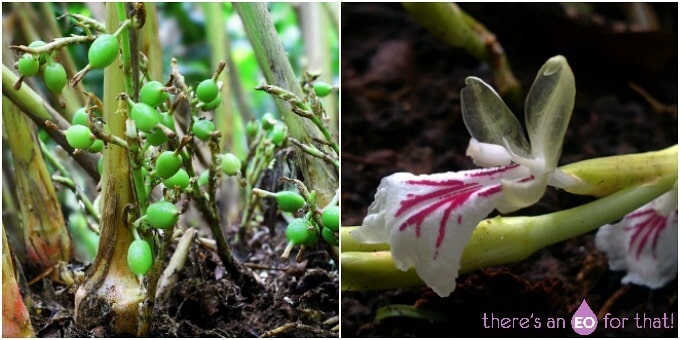
Cardamom is reputed to be one of the oldest spices used (it is also one of the most expensive spices!).
Medicinally, cardamom has been used in traditional Chinese and Ayurvedic practices for thousands of years. The spice was brought to Europe by the Greeks as early as the 4th century BC.
The name cardamom is thought to have originated from the Arab word hehmama - a derivation of the Sanskrit word for something hot and pungent.
Extraction Method and Essential Oil Characteristics
Cardamom essential oil is produced via steam distillation of the seeds of Elettaria cardamomum.
These small dark seeds are encased in the green pods of the cardamom plant. After harvesting, the husks of these pods should be removed from the seeds before distillation.
Historical and Traditional Use
While not a cure, cardamom can be exceptionally helpful for a myriad of disorders.
Traditionally, cardamom was used for treating fatigue, spasms, cramps, cardiac disorders, pulmonary disease, epilepsy, spasms, rheumatism, paralysis, fever, and all digestive issues and illness (especially discomfort associated with gas and bloating) of the abdomen, including ulcers.
It was even used to negate the lingering odor of garlic on the hands and breath.
You can use cardamom oil in this way by adding one drop of essential oil to a tiny spray bottle like this one. Spritz your hands and rub them together to help deodorize them. Try it as a mouth freshener as well either by spritzing 1-2 sprays into the mouth or by adding it to mouthwash.
Other Possible Uses of Cardamom Oil
Cardamom essential oil may also help treat loss of appetite, colic, coughs, dyspepsia, flatulence, halitosis, headaches, mental fatigue, nausea, heartburn, sciatica, menstrual cramps, menopausal symptoms, and digestive upset like vomiting and nervous indigestion.
It can also:
- Help promote clear breathing
- Reduce headaches
- Increase mental clarity
- Be used as an aphrodisiac
- Help balance hormones
- Improve digestive problems, including diarrhea
- Promotes sweating and urination
- It can help dissolve urea and calcium deposits in the kidneys
- improves respiratory health
Cardamom can be used in many of the same ways as ginger but is less irritating to the skin and lends brightness to your essential oil blends.
Chemical Components
The typical chemical composition of cardamom oil is as follows:
• 1,8-cineole (36.3%)
• citronellol (0.3%)
• geraniol (0.5%)
• limonene (11.6%)
• linalool (3.0%)
• linalyl acetate (2.5%)
• methyl eugenol (0.2%)
• myrcene (1.6%)
• nerol (0.5%)
• sabinene (2.8%)
• terpinen-4-ol (0.9%)
• trans-nerolidol (2.7%)
• α-phellandrene (0.2%)
• α-pinene (1.5%)
• α-terpineol (2.6%)
• α-terpinyl acetate (31.3%)
• β-pinene (0.2%)
• γ-terpinolene (0.5%)
Cardamom Essential Oil Benefits
Therapeutic Action
Cardamom oil is known to be:
• Anti-bacterial
• Anti-infectious
• Antiseptic
• Antispasmodic
• Aphrodisiac
• Carminative
• Cephalic
• Digestive
• Diuretic
• Diuretic
• Expectorant
• Stimulant
• Stomachic
• Tonic
Pharmacological and Clinical Studies
Cardamom essential oil is known to have powerful antispasmodic, anti-inflammatory, analgesic, and antispasmodic activity with suppressive action on carrageenan-induced edema by reducing the synthesis of eicosanoid mediators of inflammation.
It has also been shown to be particularly effective in reducing pre-operative nervousness and anxiety when inhaled before surgery.
It is also a notable mitigator of depression.
Esoteric Uses/Action
Astrological - Venus and Mercury
Body Type - Ectomorph
Chakra - 1
Character - Yang
Crystals - Carnelian
Element - Water and Air (some argue Earth)
Number - 4
Energetics - Cold dampness (Sp-9 and 6), Qi deficiency spleen (Sp-6)
Fragrant Influence and Characteristics
Cardamom essential oil is an almost colorless to pale yellow oil that darkens in direct sunlight.
The scent of cardamom oil is sweet, spicy, and balsamic, with floral undertones and a slightly penetrating camphoraceous-cineole-like odor. The scent becomes more balsamic and woodsy on the dry out.
Oil produced from green cardamom has more cineole than the lighter yellower types.
In perfumery, cardamom oil fits well into floral bases due to its warm and spicy notes. Coriander, in particular, is considered a great modifier for cardamom.
Note
Middle (50-80% of the blend)
Fragrant Intensity
4
Blend Classification
Personifier and Modifier
Blends Well With
• Balsam fir
• Bergamot
• Caraway
• Cedarwood
• Cinnamon bark
• Cistus
• Clove
• Coriander
• Frankincense
• Galbanum
• Geranium
• Juniper
• Lemon
• Myrtle
• Neroli
• Pine
• Rose
• Sweet orange
• Verbena
• Ylang ylang
Indications for Cardamom Essential Oil
Digestive System
Cardamom essential oil is especially suitable for digestive complaints like colic, cramps, dyspepsia, and flatulence and is regarded as a general tonic for the body.
It is an excellent companion to have on the boat, car, and plane rides because it relieves nausea and settles the stomach.
Mix it with ginger essential oil to create a fantastic anti-nausea blend - two drops of cardamom oil with three drops of ginger CO2 in a nasal inhaler.
Nervous System
Cardamom essential oil is known to be an effective yet gentle tonic for the nervous system and is recommended for treating nervous exhaustion, depression, and anxiety.
Respiratory System
Using cardamom essential oil in a diffuser, personal nasal inhaler, or in a sickroom spray is good for treating coughs, chronic bronchitis, and allergies. This is due to cardamom's oxide and ester molecules which are known to have an affinity for the respiratory and digestive systems.
Skin Care
Cardamom is generally not used in skin care except to impart a warming and spicy aroma to body care recipes.
Energetics
Cardamom oil is known to be a Qi tonic and has warming qualities that help stimulate stagnant digestion. It is also useful for treating damp catarrhal conditions of both the digestive and respiratory systems.
It is good for those whose endurance is tested and who constantly worry.
Personality Profile
Cardamom personalities are people who are strong-willed, upfront, motivating, and enthusiastic. They often instill inspiration in others and tend to make good leaders.
Mode of Administration and Application
• Topical application via massage, compress, bath, in body care recipes
• Inhalation via a diffuser, personal nasal inhaler, sprays, etc.
Safety
Cardamom essential oil is considered non-toxic, non-irritant, and non-sensitizing. Keep out of reach of children.
Maximum Dilution
5%
Is it Kid-Safe?
Yes, for children six years and older due to its cineole content. Read more here.
Frequently Asked Questions About Cardamom Essential Oil
Is cardamom essential oil good for the skin?
Yes! Cardamom essential oil is great for the skin as it is an antiseptic, disinfecting, and deodorizing agent. It also helps to promote healthy circulation.
Cardamom has also been used to reduce acne blemishes, soothe dry skin irritation, reduce wrinkles, and fight signs of aging.
How do you take cardamom essential oil?
Cardamom essential oil can be used in many different ways, such as through personal nasal inhalers, diffusers, sprays, baths, and massages.
It can also be added to lotions or creams for topical use.
It is important to use cardamom essential oil with a carrier so that its potent properties can be safely absorbed by the skin.
What blends with cardamom essential oil?
Cardamom oil is often blended with other oils such as orange, lavender, and clove. Its earthy tones pair especially well with floral and citrus scents.
You can also combine cardamom oil with other spices like cinnamon, nutmeg, and ginger for a warm and inviting aroma.
What are the healing properties of cardamom?
Cardamom essential oil has many healing properties, such as being antiseptic, antiviral, and anti-fungal.
It is also known to relieve indigestion, reduce stress and depression, boost the immune system, and improve circulation.
Can you put essential oils in water and drink it?
No, I do not recommend putting cardamom oil in water and drinking it.
What are the benefits of cardamom essential oil when diffused?
When diffused, cardamom oil has many benefits. It can help aid in relaxation and reduce anxiety, improve mood and concentration levels, combat fatigue, and promote restful sleep. It can also help ease cold symptoms such as sore throat and congestion.
References
Essential Oils Desk Reference - Third Edition
Essential Oils Integrative Medical Guide
Reference Guide to Essential Oils
The Complete Guide to Aromatherapy
You may also enjoy reading:
Essential Oil Profiles and Therapeutic Uses
The Maximum Dilution for 400 Essential Oils
Cardamom Orange Cookie Recipe
Chai Rose Lip Balm


Harsh Mishra says
Thanks Ma'am, your website really helps me a lot in completing my chemistry project on "Extraction of essential oil from Cardamom". I hope that if everybody would become like you, so how good would be the World Be!!!